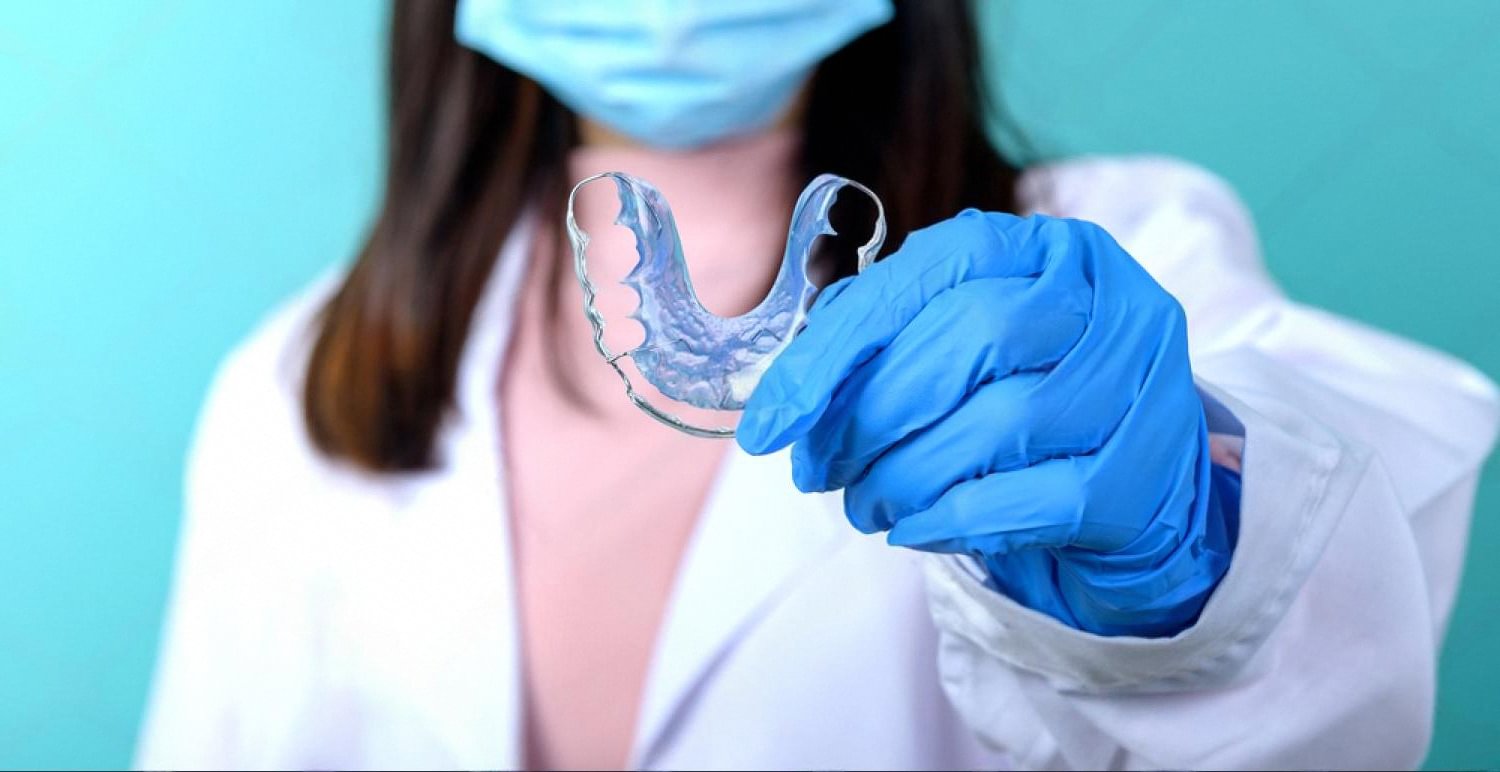
Invisalign, explained
From a quick digital scan to the smile you actually wanted
Invisalign uses a series of clear, custom-made trays to move teeth into a better position without metal brackets or wires. In the UAE, it has become one of the most requested orthodontic treatments for adults and teens who want a discreet alternative to traditional braces.
Invisalign is a clear aligner system that gradually shifts teeth using a set of removable, medically graded plastic trays. Each tray is slightly different from the one before it, and together they guide the teeth along a path that has been planned in advance using 3D software. Unlike fixed braces, the trays come out for meals, brushing, and photos, which is a large part of why patients in Dubai and Abu Dhabi choose them.
Treatment is used for crowding, spacing, mild to moderate bite issues, relapse after old braces, and general alignment concerns. It is not a cosmetic shortcut. It is a full orthodontic treatment prescribed and supervised by a qualified orthodontist in Abu Dhabi or elsewhere in the UAE, and the results depend as much on the patient’s discipline as on the technology.
Step one
The first appointment: goals, exam, and honest answers
The first visit is a conversation before it is a clinical exam. Your dentist or orthodontist will ask what you actually want to change: a gap you have never liked, crowding at the front, a bite that clicks, or teeth that shifted years after childhood braces. Being specific here matters, because it shapes the treatment plan the software will build later.
After that, the clinician examines your teeth, gums, jaw joints, and bite. They review your dental history, any past extractions, gum treatment, implants, or crowns, and go through your medical history to flag anything that could affect treatment. Conditions such as uncontrolled diabetes or certain medications, for example, can influence how the gums respond, which is why the American Association of Orthodontists recommends a full orthodontic evaluation before any aligner plan begins.
The last part of the appointment is the honest bit: whether Invisalign is genuinely the right tool for your case. Some bites are better corrected with braces, some need a short round of fixed appliances first, and some patients simply are not ready for the 20-22 hour daily commitment. A good clinic will tell you so.

Step two
Digital scan, custom plan, and a preview of your future smile
Creating a digital 3D scan of your teeth
Instead of the old putty impressions, the clinician uses an intraoral scanner, usually an iTero device, that photographs every surface of your teeth and gums thousands of times per second. The result is a highly accurate 3D model on screen within minutes. It is more comfortable than traditional impressions and, according to published research on intraoral scanning generally more accurate for aligner fabrication too.
Building your personalised treatment plan
Your orthodontist uploads the scan, along with photos and X-rays, into ClinCheck, the Invisalign planning software. They then map out every tooth movement in sequence: which tooth moves first, by how many millimetres, at what angle, and when small tooth-coloured attachments will be bonded to help the aligners grip. This is skilled clinical work, not a template. The quality of the plan is largely why choosing an experienced Invisalign dentist in Abu Dhabi matters more than any brand name on the box.
Previewing your future smile
Once the plan is approved, the software shows you a 3D animation of your teeth moving from where they are today to where they will be at the end. You will also see an approximate treatment length, usually between 6 and 18 months depending on the case. If something in the projected result does not match what you asked for in that first conversation, this is the moment to say so, before any trays are manufactured.
Step three
Wearing the aligners and staying on track
Your aligners are manufactured in a lab and shipped to the clinic in a numbered set. You wear each tray for the period your orthodontist prescribes, usually one to two weeks, before moving to the next one. The trays only come out to eat, drink anything other than water, and clean your teeth. Everything else, meetings, gym, sleep, they stay in.
That 20 to 22 hour daily target is not marketing copy. Below it, teeth do not move on schedule, the next tray no longer fits properly, and the whole plan can slip. This is the single biggest reason treatments run long. If you know you cannot commit to wearing them consistently, tell your clinician before you start.
Regular progress check-ups
Every 6 to 10 weeks, you go in for a short review. The orthodontist checks that the teeth are tracking with the plan, adjusts attachments if needed, hands over the next batch of aligners, and answers questions. Many UAE clinics now supplement this with remote monitoring apps, where you send weekly scans from your phone and only visit in person when something needs hands-on attention.
What this actually means for you
Discreet and removable
Clear trays are hard to notice in photos and video calls, and they come out for meals and brushing, so daily life barely changes.
Predictable planning
Because the movements are simulated in 3D before you start, you know the target result and the rough timeline up front, not after a year of guessing.
You control the outcome
The technology only works if you wear the trays. Discipline with wear time is the main variable that separates on-schedule cases from delayed ones.
Retention is part of the treatment
Finishing the last aligner is not the finish line. Teeth naturally want to drift back toward their old positions, which is why your orthodontist will fit retainers, usually a thin clear tray worn at night, straight after the active phase. Skipping retainers is the fastest way to undo a year of work.
Frequently asked questions
How long does Invisalign treatment usually take in the UAE?
Most cases run between 6 and 18 months. Mild spacing or minor relapse cases can finish in around 6 months, while more complex crowding or bite corrections often take 12 to 18 months.
The single biggest factor is wear time. Consistently hitting 20 to 22 hours per day keeps you on the schedule your orthodontist mapped out at the start.
Is Invisalign painful?
It is not painful in the way sharp brackets or broken wires can be, but each new aligner applies gentle pressure to move teeth, which usually feels like tightness or mild soreness for the first day or two.
Most patients switch to a new tray at bedtime so the initial pressure eases during sleep.
Can I eat and drink normally with Invisalign?
You take the aligners out for every meal and for anything other than water. Eating with them in can stain and warp the plastic, and hot drinks can distort the trays.
Brush or at least rinse before putting them back in, so food does not get trapped against your teeth for hours under the aligner.
How is Invisalign different from cheaper mail-order clear aligners?
Mail-order aligner brands typically skip the in-person exam, X-rays, and hands-on supervision. Invisalign treatment in the UAE is prescribed and monitored by a licensed orthodontist who examines your bite, roots, and gums before planning any movement.
That supervision is what catches issues like root resorption, bite collapse, or gum recession before they become permanent problems.
Do I need to wear retainers after Invisalign?
Yes, retention is not optional. Teeth have a memory and will drift back toward their original positions if nothing holds them in place, especially in the first year after treatment.
Your orthodontist will usually provide clear retainers to wear at night indefinitely, or bond a thin fixed wire behind the front teeth for extra security.
Can teenagers get Invisalign, or is it only for adults?
Teenagers can absolutely be treated with Invisalign. There is a Teen version of the product with compliance indicators that fade with wear, so parents and orthodontists can tell whether the trays are actually being used.
The suitability depends on the specific bite and on whether the teenager is ready to commit to the daily wear time, not on age alone.
What happens if I lose an aligner?
Contact your clinic straight away. Depending on how far into that tray you were, your orthodontist will tell you to either wear the previous set to hold your position, jump to the next one early, or order a replacement of the lost tray.
Do not simply skip ahead on your own, that can force teeth to move faster than the plan intended and cause the next aligners to fit badly.

Football fan, ninja, hiphop head, Eames fan and javascripter. Operating at the junction of minimalism and purpose to develop visual solutions that inform and persuade. My opinions belong to nobody but myself.